Environmental Threats
Climate change, pollution, crown-of-thorns starfish and fishing are the primary threats to the health of this reef system. Other threats include shipping accidents, oil spills, and tropical cyclones.[59] Skeletal Eroding Band, a disease of bony corals caused by the protozoan Halofolliculina corallasia, affects 31 coral species.[60] According to a 2012 study by the National Academy of Sciences, since 1985, the Great Barrier Reef has lost more than half of its corals with two-thirds of the loss occurring from 1998 due to the factors listed before.[61]
Climate Change
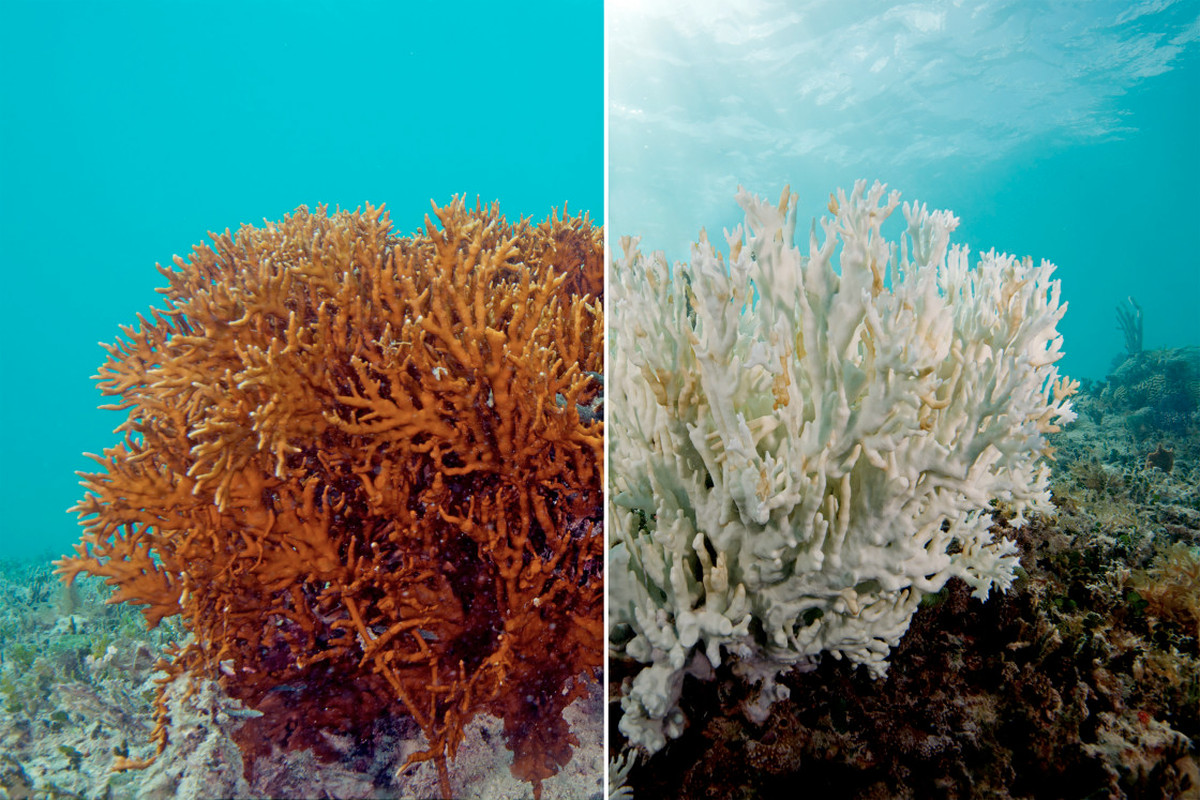
The Great Barrier Reef Marine Park Authority considers the greatest threat to the Great Barrier Reef to be climate change, causing ocean warming which increases coral bleaching.[62][63] Mass coral bleaching events due to marine heatwaves occurred in the summers of 1998, 2002, 2006, 2016, 2017 and 2020,[64][13][65] and coral bleaching is expected to become an annual occurrence.[66] In 2020, a study found that the Great Barrier Reef has lost more than half of its corals since 1995 due to warmer seas driven by climate change.[65][67] As global warming continues, corals will not be able to keep up with increasing ocean temperatures. Coral bleaching events lead to increased disease susceptibility, which causes detrimental ecological effects for reef communities.[68]
In July 2017 UNESCO published in a draft decision, expressing serious concern about the impact of coral bleaching on the Great Barrier Reef. The draft decision also warned Australia that it will not meet the targets of the Reef 2050 report without considerable work to improve water quality.[69] Climate change has implications for other forms of reef life – some fish's preferred temperature range leads them to seek new habitat, thus increasing chick mortality in predatory seabirds. Climate change will also affect the sea turtle's population and available habitat.[70]
Bleaching events in benthic coral communities (deeper than 20 metres or 66 feet) in the Great Barrier reef are not as well documented as those at shallower depths, but recent research has shown that benthic communities are just as negatively impacted in the face of rising ocean temperatures. Five Great Barrier Reef species of large benthic corals were found bleached under elevated temperatures, affirming that benthic corals are vulnerable to thermal stress.[71]
Pollution
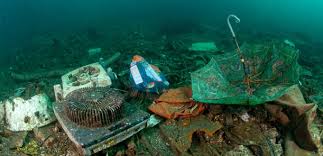
Another key threat faced by the Great Barrier Reef is pollution and declining water quality. The rivers of north-eastern Australia pollute the Reef during tropical flood events. Over 90% of this pollution comes from farm runoff.[72] 80% of the land adjacent to the Great Barrier Reef is used for farming including intensive cropping of sugar cane, and major beef cattle grazing. Farming practices damage the reef due to overgrazing, increased run-off of agricultural sediments, nutrients and chemicals including fertilisers, herbicides and pesticides representing a major health risk for the coral and biodiversity of the reefs.[73]
According to a 2016 report, while higher regulation contributes to less overall pollution from "other land uses, such as industrial, mining, port development, dredging and urban development", these can still be locally significant.[74] Sediments containing high levels of copper and other heavy metals sourced from the Ok Tedi Mine in Papua New Guinea are a potential pollution risk for the far northern Great Barrier Reef and Torres Strait regions.[75] Some 67% of corals died in the reef's worst-hit northern section, the ARC Centre of Excellence for Coral Reef Studies report said.[76]
Overfishing
The unsustainable overfishing of keystone species, such as the giant Triton, can disrupt food chains vital to reef life. Fishing also impacts the reef through increased water pollution from boats, by-catch of unwanted species (such as dolphins and turtles) and habitat destruction from trawling, anchors and nets.[84] As of the middle of 2004, approximately one-third of the Great Barrier Reef Marine Park is protected from species removal of any kind, including fishing, without written permission.[85]
Shipping
Shipping accidents are a pressing concern, as several commercial shipping routes pass through the Great Barrier Reef.[86] Although the route through the Great Barrier Reef is not easy, reef pilots consider it safer than outside the reef in the event of mechanical failure, since a ship can sit safely while being repaired.[87] There have been over 1,600 known shipwrecks in the Great Barrier Reef region.[88] On 3 April 2010, the bulk coal carrier Shen Neng 1 ran aground on Douglas Shoals,[89] spilling up to four tonnes of oil into the water and causing extensive damage to the reef.[90]
Shark Culling
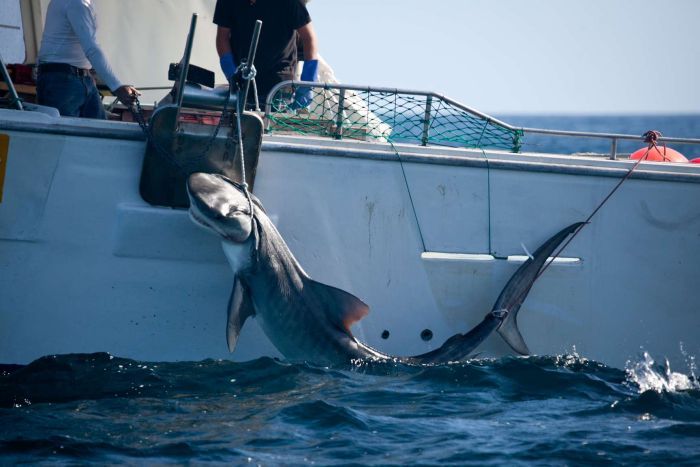
The government of Queensland has a "shark control" program (shark culling) that deliberately kills sharks throughout Queensland, including in the Great Barrier Reef.[91][92] Environmentalists and scientists say that this program harms the marine ecosystem; they also say it is "outdated, cruel and ineffective".[92] The Queensland "shark control" program uses shark nets and drum lines with baited hooks to kill sharks in the Great Barrier Reef – there are 173 lethal drum lines in the Great Barrier Reef.[91][92][93] In Queensland, sharks found alive on the baited hooks are shot.[94] Queensland's "shark control" program killed about 50,000 sharks from 1962 to 2018.[95] Also, Queensland's "shark control" program has also killed many other animals (such as dolphins and turtles) – the program killed 84,000 marine animals from 1962 to 2015, including in the Great Barrier Reef.[96] In 2018, Humane Society International filed a lawsuit against the government of Queensland to stop shark culling in the Great Barrier Reef.[93]